WHY IS AN ON-SITE TAX AUDIT ORDERED, AND WHAT SHOULD MICROFINANCE ORGANIZATIONS AND PAWNSHOPS PREPARE FOR?
NAUFR continues to inform Association members about tax audit practices based on its review of audit reports.
The report on an on-site tax audit conducted at one microfinance organization covers accounting, personnel records, property holdings, and inventory procedures.
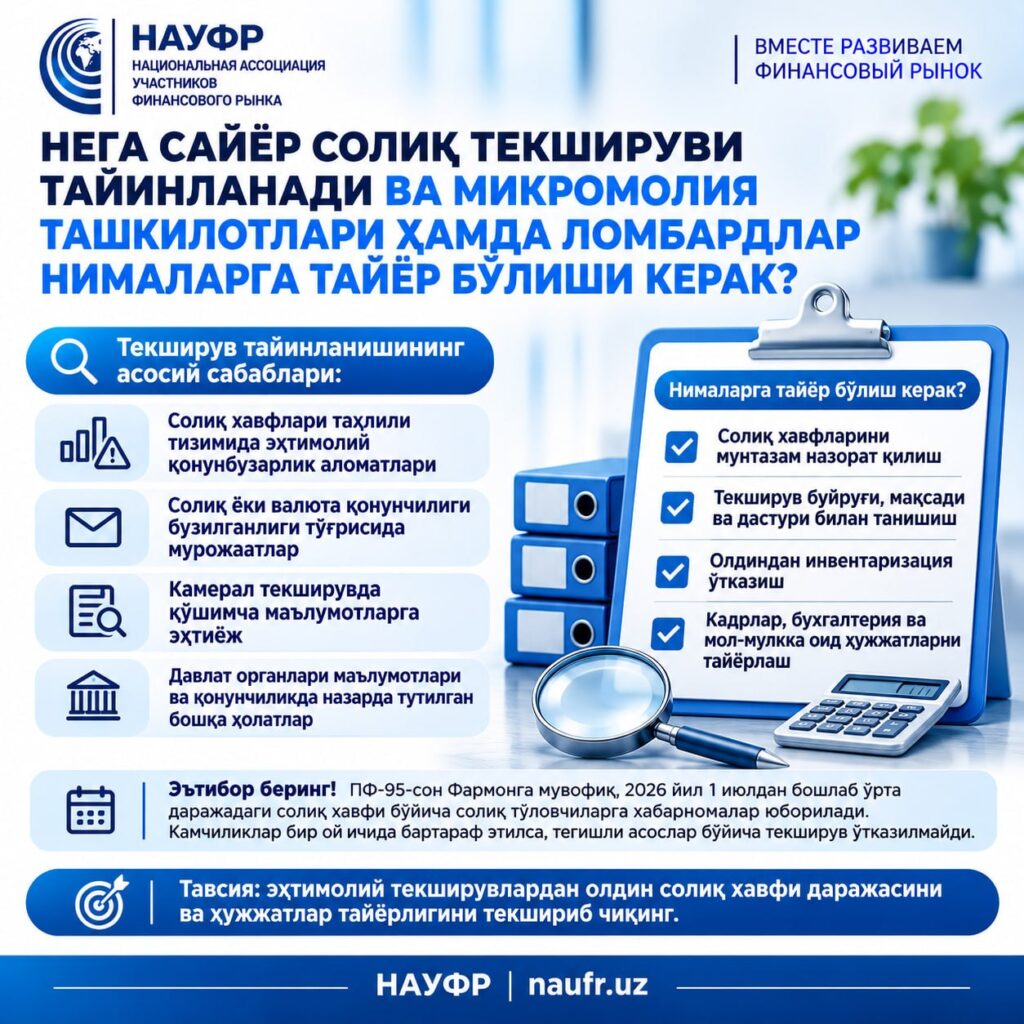
WHAT MAY PROMPT AN ON-SITE TAX INSPECTION?
According to clarifications from the Tax Committee, grounds for conducting an on-site tax audit may include:
indications of possible violations identified through the tax risk analysis system;
receipt of reports of violations of tax or currency legislation;
the need to obtain additional information during a desk tax audit;
information received from government authorities and other cases provided for by law.
Important: the reason a taxpayer is selected for an audit should be distinguished from the legal grounds for conducting it.
The report reviewed states that the audit was conducted pursuant to an order issued by the tax authority. However, the report does not specify why the organization was selected for the audit.
PAY ATTENTION TO YOUR TAX RISK LEVEL
Under Decree No. UP-95 of the President of the Republic of Uzbekistan dated May 19, 2026, beginning July 1, 2026, notifications are to be sent to taxpayers with a medium tax risk rating.
If the identified deficiencies are remedied within one month, no tax audit will be conducted on the corresponding grounds.
WHAT ISSUES WERE EXAMINED IN THE REPORT REVIEWED?
The organization's registration and personnel records;
Payroll calculations;
Accounting for fixed assets and inventory;
Documents relating to the premises in use;
The physical existence of property;
Inventory results and the presence of unrecorded tangible assets.
WHAT DOES NAUFR RECOMMEND?
1. Monitor tax risks. Regularly check notifications in the taxpayer's personal account and promptly provide explanations for any discrepancies identified.
2. Check the grounds for initiating the inspection. Upon receiving an audit order, review its purpose, timeframe, and program.
3. Conduct an inventory in advance. Reconcile the physical property on hand against the accounting records, and check the documents confirming its ownership.
4. Prepare the documents. Review personnel records, accounting and settlement records, lease agreements, and inventory materials.
Legal and regulatory basis:
Tax Code of the Republic of Uzbekistan — Article 139
Decree No. UP-95 of the President of the Republic of Uzbekistan dated May 19, 2026
Tax Committee: In what cases is an on-site tax inspection conducted?
This material is based on an audit report from which personal data and information that could identify the organization have been removed, as well as official regulatory sources. The stated grounds for ordering audits are provided for general information and should not be construed as the specific reasons for any particular audit.
We recommend that managers, chief accountants, and internal auditors at microfinance organizations and pawnbrokers assess their tax risk level and document readiness before any potential audits.